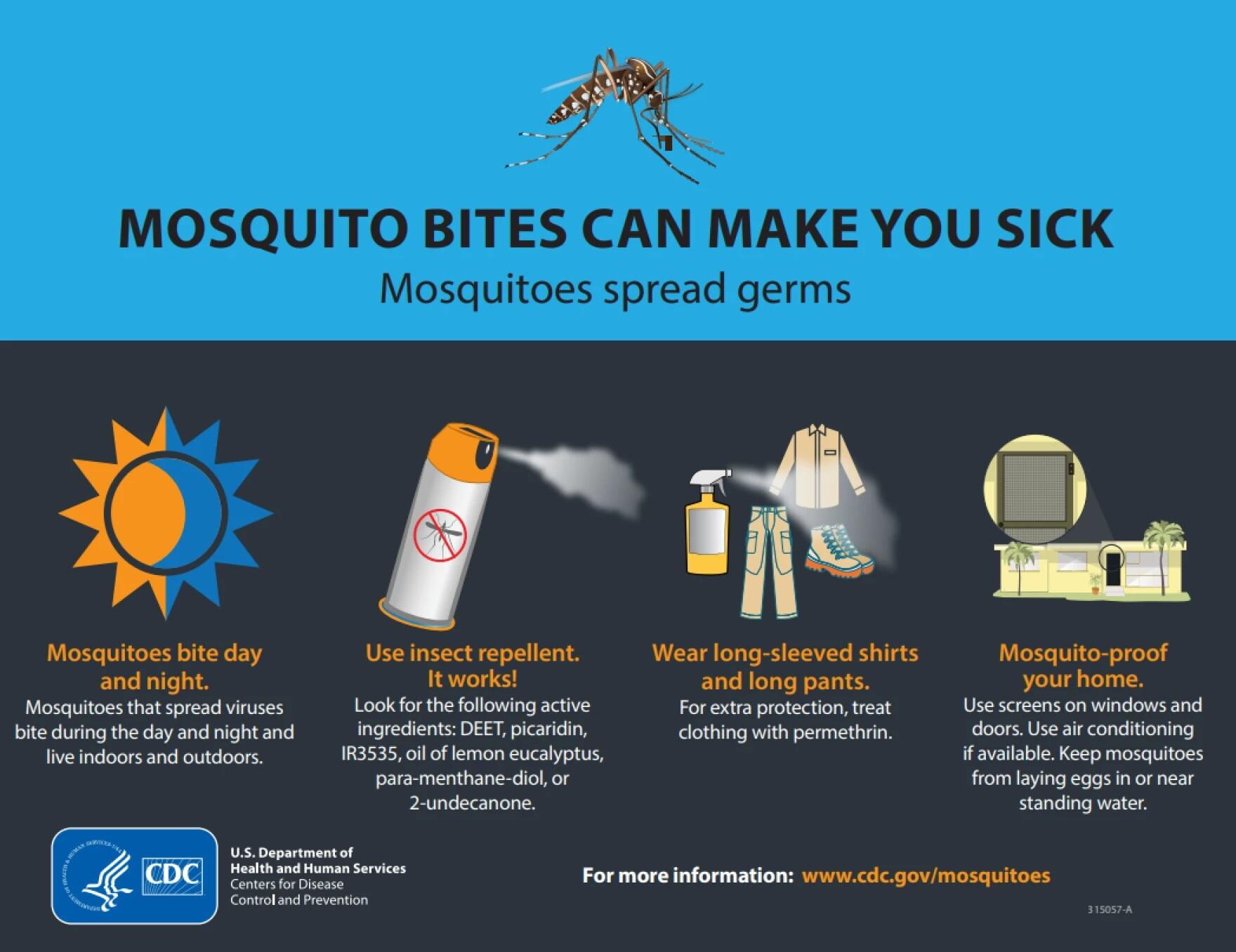
FLORIDA — Public-health guidance points to the same stack: an EPA-registered repellent on skin, clothes that cover you, permethrin on gear the label allows, and a screened place to eat and sleep. Mosquitoes bite in the day and at night. Start before the evening swarm.
The goal is simple. Make it harder for a mosquito to reach your skin. Keep them outside the sleeping space. Do not leave water sitting in your own gear.
Start with the campsite
Florida changes with rain, heat, and flooding. A site that was easy last month can be thick with mosquitoes after a storm. Floodwater can hatch eggs already in the soil. A sudden swarm does not, by itself, tell you whether those mosquitoes carry disease.
In the Everglades, the cooler, drier months usually mean fewer mosquitoes. Wet-season heat and rain can bring heavy mosquitoes and biting flies. The National Park Service still says to bring repellent, and a head net or bug jacket, even in the dry season. Winter is not a promise of zero bites.
Before you leave, ask the campground what the insects are like right now. Ask if a screened shelter is open. Ask if recent flooding reached the sites.
When the rules let you choose a site, look for drainage and some airflow. Strong moving air makes it harder for a mosquito to fly. Safe camping comes first. Do not pick a flood pocket, a dangerous tree, or an open storm site just to catch a breeze.
Choose repellent by the ingredient
The brand on the bottle matters less than the active ingredient, the directions, and the hours on the label. Look for an EPA registration number.
Florida Department of Health lists DEET, picaridin, oil of lemon eucalyptus, PMD, and IR3535. The CDC poster also lists 2-undecanone. Products with up to 30 percent DEET are generally recommended. A 2025 Florida health guidebook also lists DEET in the 10 to 30 percent range, plus 2-undecanone.
| Ingredient | What to know |
|---|---|
| DEET | Well studied. Up to 30 percent is the Florida health recommendation for most people. Follow the label. |
| Picaridin | Another registered option. A 20 percent product can last longer than a weak one. The label sets the time. |
| Oil of lemon eucalyptus or PMD | Plant-derived ingredient, or its made counterpart, in an EPA-registered bottle. That is not the same as a bottle of essential oil. |
| IR3535 or 2-undecanone | Other registered options. Read the insects covered, the age line, and the hours. |
A higher percent usually means longer time, not a reason to use more product. Guidance used by pediatric groups says DEET above about 50 percent does not add a marked increase in protection time. Heat, sweat, swimming, and rubbing shorten the time. Reapply only as often as the label allows.
You can look up a registered product on the EPA repellent finder.
Put it on the right way
- Cover exposed skin as the label says. Do not put it under clothing, on a cut, or on irritated skin.
- For the face, put repellent on your hands first, then spread it. Keep it out of eyes and mouth.
- Spray in open air, not inside a closed tent. Keep it off food.
- Read the fire warning before you spray near a stove, a campfire, or a cigarette. Many sprays are flammable.
- Wash treated skin when you no longer need the protection.
- Sunscreen goes on first. Repellent goes on second. Use two products. Sunscreen often needs another coat before the repellent does.
Cover skin without cooking yourself
Long sleeves, long pants, socks, and closed shoes leave less skin to bite. Loose cloth is better than thin cloth pulled tight. A mosquito can bite through thin cloth.
University of Florida extension guidance treats light-colored clothing as a useful choice. Color does not replace coverage. A pale tank top still leaves shoulders bare. In a heavy swarm, close the gaps at the ankles and the waist, and put a head net over a hat.
Florida heat is real. Pick cloth that breathes. Take breaks. Keep water with you. In the Everglades, the park service tells visitors to wear loose clothes and to drink water in the heat.
Put the evening clothes and the repellent where you can reach them. Do not bury them under the sleeping bags until you are already getting bitten.
Treat clothes and gear with permethrin
Permethrin is not a skin repellent. It is an insecticide for certain clothes and gear. It can repel or kill mosquitoes and other biting insects on the treated item.
Use a 0.5 percent product labeled for clothing and gear, or buy items the factory already treated. Shirts, pants, socks, boots, and some tents can be on the label. The label decides what you may treat and how long it lasts. Do not put clothing permethrin on your skin.
- Treat items before the trip, outdoors, where the air moves.
- Never spray clothes while someone is wearing them.
- Let everything dry before you wear it or pack it.
- Follow the wash and retreatment lines.
A pesticide that contains permethrin is not automatically a clothing spray. Skip livestock, farm, and yard formulas.
Keep cats away from the spray and from wet treated items. Permethrin is highly toxic to cats, and to fish and other water life. Do not let spray or runoff reach the water. Treating a shirt is not permission to spray a shoreline.
Make the tent the sleeping room
A screen works when the opening is actually covered. Before you leave home, check the mesh, the door zipper, the seams, and every other hole. Patch a tear. Do the same for an RV window and a screen door.
- Close the mesh door every time someone goes in or out.
- Keep unscreened openings shut.
- Look inside before you settle for the night.
- Keep your skin off the net while you sleep. CDC warns that a mosquito can bite through netting when skin rests on it.
Check nets for holes and keep them away from flames. If you sleep outside with no screened shelter, use a mosquito net that fits.
A hammock needs a full barrier, not a loose panel over your face. Check how the net closes around the hammock when someone is in it.
A screened dining shelter gives the group a place to eat. Close the door and keep the mesh sound.
Use a fan when you have power
A fan is one of the best extras for car camping. University of Florida extension notes that mosquitoes do not fly well in a strong wind. Aim the air across the people, including legs and ankles. A fan pointed at an empty corner does not help the table.
A fan toward a doorway can also cut the mosquitoes that follow people inside. It is an extra layer. It does not replace a closed screen, or repellent when you walk out of the airflow.
Bring enough battery for the hours you will sit outside. Keep the fan and the power pack dry the way their instructions say.
Empty the water in your own gear
Florida’s Drain and Cover advice fits a campsite. Water collects in buckets, coolers, boat covers, toys, and tarps that sag into pockets. After rain, dump water you do not need. Store empty containers upside down. Keep covered water closed. Change a pet’s drinking water. Follow the campground rule when you empty wastewater.
This is your gear. It is not a marsh, a natural pool, or a wetland. Tell staff if a site stays flooded.
On a long stay, staff may use a larvicide where water cannot be dumped. Products with Bti target larvae in water. They do not chase adult mosquitoes off your chair. Use one only where the label allows and where the campground says yes. Do not toss a mosquito dunk into a park pond on your own.
Devices, candles, coils, smoke, and lights
Some devices put repellent into the air around a seat. EPA calls these spatial repellents. They include certain heated mats, diffusers, and lantern-style products. Read the coverage area, the startup time, the wind limit, and whether the product is outdoor-only. Wind moves the cloud. An outdoor-only device does not belong inside a tent, a vehicle, or a closed camper. It does not follow you to the bathhouse. CDC says to add skin repellent, clothes, or a net. Do not breathe the spray or the smoke on purpose.
A citronella candle can help close to the candle when the air is still. It is not a fence around the campsite.
Coils and other burning products must follow the label. Keep them off the tent, off the net, and away from children and anything that can catch fire. Read the campground fire rule first. If smoke bothers someone’s breathing, especially a child, start with a screen and a fan.
A campfire is for the evening, not for making a cloud of smoke to sit in. Do not build the night around heavy smoke.
EPA says yellow “bug lights” may draw fewer mosquitoes than a normal bulb. They do not repel mosquitoes. A yellow lantern does not make you safe. Use the light you need, keep the tent door closed, and do not treat a quieter lamp as full protection.
Skip the tricks that do not hold up
University of Florida extension has tested the popular shortcuts. These are the ones to leave out of the plan:
- Repellent wristbands and stickers. Do not count on them to protect your whole body.
- Ultrasonic gadgets and phone apps that claim to repel mosquitoes with sound.
- Garlic, vitamin B, onions, and special camping meals. Eating a food does not make you reliably unattractive to mosquitoes.
- A pot of citronella, lavender, or basil beside the tent. A plant is not a tested repellent formula.
- Electric bug zappers. They kill many other insects and do not reliably cut the mosquito count.
- A single heat, carbon-dioxide, or scent trap. Catching some mosquitoes does not automatically stop the ones biting you.
- Homemade sprays and essential oils. “Natural” does not set a protection time or a safety test. Pure lemon-eucalyptus oil is not an EPA-registered oil-of-lemon-eucalyptus repellent.
Campers who want less insecticide can lean on screens, clothes, a head net, a fan, and time in a sheltered space. Those are real barriers. They are not a promise of zero bites.
No-see-ums need their own mesh
Not every tiny bite is a mosquito. No-see-ums are biting midges. They show up on Florida coasts and marshes, and some live inland. They are small enough to pass mesh that stops mosquitoes.
On a coastal trip, use a tent or shelter with mesh made for no-see-ums. Check seams and the door gap as carefully as the cloth. Cover skin. Read whether the repellent label includes the insects you are fighting. Finer mesh can cut airflow, so think about ventilation when you pick the shelter.
Bites inside a screened shelter do not always mean the repellent failed. Look for a tear, an open door, or insects small enough to walk through that screen.
Children, pregnancy, and pets
Babies and children
Florida Department of Health says use mosquito netting for a child younger than 2 months. Fit the net over a carrier or stroller. Do not put repellent on a baby that young. Ask a pediatrician before you choose any product for a very young infant.
For an older child, an adult applies the product. Keep it off hands, eyes, mouth, cuts, and irritated skin. Do not spray a child’s face. Put it on your hands, then on the child.
The American Academy of Pediatrics says repellents used on children should contain no more than 30 percent DEET. CDC guidance says not to use oil of lemon eucalyptus or PMD on a child younger than 3. The product’s own age line still rules. Read it.
Pregnancy and breastfeeding
CDC says an EPA-registered repellent can be used in pregnancy and while breastfeeding when you follow the label. Pregnancy is not a reason to switch to an untested substitute. A clinician can help with a personal question.
Dogs and cats
Mosquitoes spread heartworms. FDA guidance is year-round heartworm prevention for dogs, chosen with a veterinarian. Cats can be infected too. Do not put a human spray on a pet unless that label allows that animal. Never assume a dog product is safe for a cat. A screened rest spot helps. Permethrin clothing spray is dangerous to cats. Keep them away from it.
Leave campground spraying to the staff
A yard fogger is not a shortcut. A spray can give short relief, then mosquitoes come back from untreated ground. Some sprays also hit helpful insects, water life, furniture, and pet bowls.
Tell the campground if the mosquitoes are severe. Ask if they work with the local mosquito-control program. Do not spray shared bushes, the next site, a food table, or natural water unless you are allowed to.
A control program can look at breeding spots and pick a treatment for that place. Keep your own bite plan even when the campground is treated.
Match the plan to the trip
These are combinations of the steps above. They are not a guaranteed kit.
- Car camping. Screened tent, a battery fan at the chairs, repellent, and long clothes. A screened dining shelter helps when several people eat together.
- Backpacking. A tent or bug net you trust, enough repellent for the days, covering clothes, and a small head net. Treat gear before you leave. Do not spray beside a stream.
- Hammock. The net has to close around the whole sleeping space, and your skin should not rest on it.
- RV. Fix screen doors and windows. Shut openings that have no screen. Use the air conditioner when you have it. A fan helps the chairs. An open RV door still lets insects in.
- Coast and paddle trips. No-see-um mesh, a head net, and repellent you can reach while you unload. Do not wait until the camp is fully set.
When you are still getting bitten
Move into a screened place. Check the label before you put on more repellent. Check for bare ankles, an open door, and a hole in the mesh.
For an ordinary bite, wash with soap and water. CDC suggests an ice pack for about 10 minutes to ease swelling and itching. An over-the-counter anti-itch product can help when you follow its label. Try not to scratch. Broken skin can get infected.
Get medical advice for redness that spreads, pain that gets worse, or other signs of infection. If fever, headache, muscle or joint pain, or a rash shows up after the trip, tell a clinician where you camped and when. Do not treat every symptom as a simple itch.
Call 911 for trouble breathing or another severe reaction. If you think the repellent caused a reaction, stop using it, wash the skin, and call a clinician or Poison Help at 1-800-222-1222.
Questions
What repellent should a Florida camper use?
Use an EPA-registered repellent and follow the label. Florida Department of Health lists DEET, picaridin, oil of lemon eucalyptus, PMD, and IR3535. The CDC poster also lists 2-undecanone. Products with up to 30 percent DEET are generally recommended.
Can permethrin go on skin?
No. Use 0.5 percent permethrin only on clothing and gear the label allows. Do not put it on skin. Keep cats away from wet treated items. Keep spray and runoff out of the water.
How do campers keep no-see-ums out?
Use mesh made to stop no-see-ums and close every gap. Ordinary mosquito screen can be too coarse. Cover skin and read whether the repellent label includes biting midges.
What protects a baby younger than 2 months?
Florida Department of Health says use mosquito netting for a child younger than 2 months. Do not put repellent on that baby. Ask a pediatrician before using any repellent on a very young infant.
Do citronella candles protect a whole campsite?
A citronella candle can help only close to the candle when the air is still. It does not make a reliable ring around a campsite. Screens, clothing, and an EPA-registered repellent are the plan.
Packing list
- EPA-registered repellent
- Loose long clothes, socks, and closed shoes
- A screened tent or shelter, plus a patch for the mesh
- A head net
- Clothes or gear already treated, if the label fits the trip
- A fan and enough power, when the camp allows it
- A screened place to eat, when the group is large
- No-see-um mesh for the coast
Before you go, read the campground notice and the county health page. Mosquito-borne illness is a reason to take the routine seriously. A calm setup beats a gadget with a big promise.
Protect your skin. Protect the place you sleep. Keep water out of your buckets and tarps. Add a fan where you can. Do this while you set up camp, not after the biting starts.
This Is Florida does not book the campsite. Fees, fire rules, and insect conditions can change. The campground and the product label are the last word.
Camping in Florida Hurricane prep Burn bans Alligators Emergency contacts